Feeds:
Posts
Comments

Posts Tagged ‘reporting’

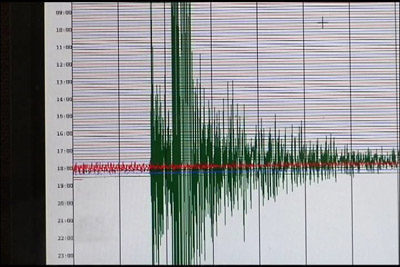
Virginia Tech seismograph, WSLS
Tuesday’s earthquake was a perfect “example of a breaking news story that called for audience engagement to be at the center of news reporting,” as Matt DeRienzo, a group editor of Journal Register Company’s publications in Connecticut, wrote in a blog post describing his company’s new-gathering efforts. I quote him mainly because the Journal Register currently is pointed to as a digital-first model, which a heavy emphasis on the Web and on social media, and yet as I read what DeRienzo describes I was struck by the parallels with what I knew had gone on at a number of the properties in my own Media General. JRC gets plenty of positive press, we don’t, so I’ll point out a few of the success stories.

In the most detailed story I have received so far, Ike Walker at WCMH in Columbus, Ohio, describes a big success using Twitter — and key to it is something mentioned a few months ago in a post by The Lost Remote:

“Within a minute of the quake hitting here our email inbox was filled with people asking what had happened. We tried to answer as many of them via email as possible but immediately switched our strategy to social media. Within a few minutes we had started the hashtag #columbusquake and were asking for people to share their stories and locations. The #columbusquake hashtag generated a large number of submissions and made it easier to track conversations in real-time with our users. Lesson learned: when you have a big event like this and you want to dominate the conversation at least on Twitter start a hashtag.”

Beyond Twitter, he has more often-repeated lessons — have staff dedicated to Web-first efforts, pay attention to what people in your audience are saying, and respond to them:

“As people continued to send us stories we used them on air and then created a Google map with pinpoints to map all of the stories showing how widespread the reports were. Because the reports were coming in so fast we had to dedicate a person to handling the map. I don’t know yet how many people clicked on the map however the story got almost 30k page views.

“The conversation continued on Facebook with our staff jumping in and engaging users.”

Kevin Justus at WSPA in Greenville/Spartanburg, S.C., says his station was soliciting information from the audience via social media 20 minutes before others in the market:

“Immediately after we felt the tremor we sent out a simple ‘Did anyone else feel that shaking?’ on Facebook and Twitter. Within 10 seconds we had more than 50 comments, so we knew it was an earthquake. We continued to cover the story on social media as the information came in. Our Facebook wall became a forum for our user’s experience with the earthquake.”

And cross-promote your online and social efforts, not only purely as promotion but also because during a news event such as this, phone lines and websites might be overwhelmed. Kari Pugh, the interim managing editor at the News & Messenger/insidenova.com in Prince William County, Va., just outside Washington, says she heard from readers that the phone and Internet were so overwhelmed in the region that the only news they were getting at times was from text relaying the updates to the insidenova.com Facebook page:

“We gained about 300 Facebook fans yesterday, and we were the only news source for people because Internet and cell and landline phone lines were clogged. They said they were able to get our FB updates via text. We posted continuous updates about damage, traffic, evacuations, aftershocks from the time it happened til about 1:30 a.m.”

(For a refresher on tips for “mastering live news,” have a look back a post on the subject at Steve Buttry’s blog.)

Read Full Post »


Maybe it’s my print bias, but I have never liked that staple TV news convention, the live shot, in which a reporter on the scene tells someone in the studio what the news was. It seems artificial, creating the illusion of action (It’s live! On the scene!) through something that carries both the risk of unexpected errors or intrusions and also unproductive time — you have to go, you have to set up, you have to wait for your segment. And I have heard that situations like the one depicted above are not uncommon: While you are doing your live shot, something happens, but you can’t go cover it. (Although, as Mark Joyella notes in a post for Mediaite, this one produced some funny TV.) In this example, it’s an overcovered story, with hundreds of reporters on the scene, so this reporter’s situation poses no real loss to the public (but a loss to the reporter’s ego, and to whatever need the station management felt to “brand” the story with its own reporter). One would hope if something really important were happening, the reporter would excuse himself from the shot. In a time of dwindling staff, a better solution is needed, one that doesn’t tie up reporters just so they can talk on a live feed.

Read Full Post »

Really Big Words toy for kids
Writers often are told never to use a big word when a small one will do. We’re told to aim for an eighth-grade reading level (that’s middle school, not even high school). But that’s a guideline or rule, not a law, so you will see and hear big words in news stories fairly regularly. Each year the New York Times prints a list of the words that its online readers have had the most trouble with, as measured by their use of the site’s dictionary function, and the 2011 version of the list provides, as usual, some examples of why you can’t always tell what the typical reader is going to consider to be a word beyond his or her everyday understanding. For instance, at No. 10 is “recognizance.” Really, recognizance? One would think many of those who didn’t learn the word in school at least had heard it used in a sentence by the judge explaining that they were being released on their own. (Along those same lines: “incarcerated” appears at No. 42.) And at No. 22: “cronyism.” Cronyism?! I cannot, as an editor, ask a writer to avoid using “cronyism” when confronted with a case of someone important surrounding himself with unqualified friends and supporters instead of people who know what they are doing. What would you say instead that takes less fewer than 16 words? And No. 49: “juggernaut.” What, did people think this was like a space program to send explorers into the jugger?

Sometimes I have sympathy — just a little — for the point of view of one writer years ago who opined (verb, meaning he expressed an opinion) that God forbid readers should have to grab a dictionary. “A what?” Exactly.

The Nieman Journalism Lab has loaded the words and stats into a spreadsheet, if you want to take a closer look at them in a different order than the Times presented them.

Read Full Post »


In a fairly egregious error, a North Carolina newspaper identified a vine that some say has grown up a pole into the form of Jesus on the cross as kudzu. I can tell just looking at the thumbnail image that it isn’t kudzu (the paper later corrected itself and identified it as trumpet vine), but come on. No one could tell before publication? Not the reporter? The photographer? The editor or page designer? You might not know what it is, but if you drive down rural Southern highways you ought to know what it isn’t. North Carolina ought to deport those involved northward.

Read Full Post »

The public editor (a.k.a., ombudsman) of the New York Times answers the question that some would say needs no answer: “Is the New York Times a liberal newspaper?” And he wastes no time: “Of course it is.” The article goes on to chronicle in detail the regular, daily evidence of the left-leaning perspective the paper’s staff as a whole clearly has (I’m not arguing), resulting, he argues, from the nature of New York itself and the kind of people drawn there, let alone (says I) the type of people drawn to working at the Times.

Is this a good thing or a bad thing, or neither? If everyone who worked at the Times — and at any news organization — recognized and remained aware through the day of how his or her views were similar or different than his or her audience, it would be a little less of an issue. I think people don’t necessarily expect you to think and act the same as they do, but they don’t like feeling that you perceive them as odd or that you don’t understand them, even if you disagree. This is part of why I and many reporters always say that if you get complaints from both sides on your story, you think you did a good job.

So why am I posting this? For this: You can’t be 100 percent neutral in almost anyone’s eyes. Your approach and coverage will inevitably be influenced by your own background and experience. If you don’t believe this, then go to your nearest Burger King, notice the people there, then visit BKs in very different places and notice the people there. Listen to conversations (to the extent you can without being intrusive). What’s important is not that you are on the same page as all of the people around you, but do you understand where they come from? Can you represent those people fairly? That’s all anyone really expects.

Read Full Post »

Lt. Schwenk
In a nearly 112-years-overdue, story-length correction, James Barron of the New York Times uncovers an impressive amount of detail about numerous errors the Times and others made in accounts of one man’s life, including in his obituary, and the mystery surrounding some of the facts in those accounts. But the real mystery to me is this: Why is this story more engaging than almost anything else I’ve seen in the Times in recent times? Is it merely the lure of a mystery? Or is it the look into the kind of details about a person’s life that we don’t usually get in the typical story — that I would have read all the way through a story about a modern person if it were like this?

The Bristol Herald-Courier has been treading some similar ground recently with stories about unsolved murders (the first was about a nurse’s death in Chilhowie, Va., and just this past weekend there was a three-parter, Outlaws or Inlaws). Murder mysteries have proven appeal, but is it the mystery or the people that draws an audience?

Read Full Post »

Thanks to Matthew Ingram of GigaOm for transparency and the work compiling a debate conducted via Twitter about news stories offering links to source material. That news stories should provide links is a given for many, like Matthew, but it’s not a universal view. I think it’s the ideal (as Matthew writes, doing readers a service “by making stories as complete as possible and by providing them with links to further information instead of making them hunt through Google for it” — which also makes sure they don’t find misinformation via Google), but I struggle, given the limitations of the content-management systems I’m familiar with, with the idea of where in the process the links get inserted and by whom, especially if it’s to be the norm for all staff-generated stories. The Web “staff” at most news sites are not enough to handle the volume, and as noted by Patrick LaForge in the Twitter debate, it doesn’t fit neatly into the reporting and writing process. Which is probably how we arrive at the current state of affairs: Stories deemed to be important and of high reader interest get the attention needed to build the Web extras, including links to outside material, but the typical story is linkless. (Another job for the robots?)

5/20/2011 UPDATE: More on this subject, from Publish2.

5/21/2011 UPDATE: I confess I am still catching up on much of the online debate on this topic (more here, with good discussion in comments) and have no idea yet what initially brought this boiling back up as a major topic this week. It seems to me that, while it might be helpful as Scott Karp at Publish2 suggests to adopt technology that favors Web-first publication and easy importing of that work into a print editorial system, and while those such as Doc Searls are correct in saying there remains some (ever declining, in my experience) curmudgeon resistance to the idea of linking out, the larger problem is trying to turn the Titanic. A daily newspaper of any size, especially if it is part of a larger integrated media company, simply has so many moving parts (human, mechanical and technological) that we all might recognize exactly what we wish we could do, but it’s like being in the left lane of the expressway at rush hour when you realize, as your passengers give you instructions on five separate topics, that there’s an exit just ahead that would take you to a much better route home. It’s a direct descendant of the much older issue that used to be the big eternal issue occupying newsrooms, which is balancing the desire for really excellent writing against the need to meet deadline (a saying I always heard goes something like, “Good writing is a fine thing, but we have a newspaper to put out”).

Read Full Post »

« Newer Posts