Feeds:
Posts
Comments

Posts Tagged ‘social’


You could summarize the results of the new Nielsen Social Media Report as “all the trends you’ve heard about are still happening,” except there are a couple of details that seemed a little surprising. Topping the list: Internet users over the age of 55 are driving the growth of social networking through the mobile Internet. I did not know that and would not have guessed it. Less surprising is social media’s growing ubiquity: Social networks and blogs account for nearly a quarter of total time spent on the Internet, and nearly 4 in 5 active Internet users visit social networks and blogs.

I can’t tell how good or bad some numbers in the report are, such as that Americans spend 22.5 percent of their Internet time on social networks and blogs, and just 2.6 percent on current events & global news. As Steve Myers points out at Poynter.org, blogs could include news blogs, and portals post news stories. And he doesn’t point it out, but many news organizations now make social networks, especially Facebook — where Nielsen says Americans spend more time on than on any other U.S. website — a key part of their efforts to engage the audience, so people could be on social networks and still be on a news-related site.

Read Full Post »

Virginia Tech seismograph, WSLS
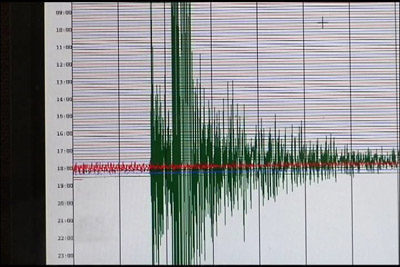
Tuesday’s earthquake was a perfect “example of a breaking news story that called for audience engagement to be at the center of news reporting,” as Matt DeRienzo, a group editor of Journal Register Company’s publications in Connecticut, wrote in a blog post describing his company’s new-gathering efforts. I quote him mainly because the Journal Register currently is pointed to as a digital-first model, which a heavy emphasis on the Web and on social media, and yet as I read what DeRienzo describes I was struck by the parallels with what I knew had gone on at a number of the properties in my own Media General. JRC gets plenty of positive press, we don’t, so I’ll point out a few of the success stories.

In the most detailed story I have received so far, Ike Walker at WCMH in Columbus, Ohio, describes a big success using Twitter — and key to it is something mentioned a few months ago in a post by The Lost Remote:

“Within a minute of the quake hitting here our email inbox was filled with people asking what had happened. We tried to answer as many of them via email as possible but immediately switched our strategy to social media. Within a few minutes we had started the hashtag #columbusquake and were asking for people to share their stories and locations. The #columbusquake hashtag generated a large number of submissions and made it easier to track conversations in real-time with our users. Lesson learned: when you have a big event like this and you want to dominate the conversation at least on Twitter start a hashtag.”

Beyond Twitter, he has more often-repeated lessons — have staff dedicated to Web-first efforts, pay attention to what people in your audience are saying, and respond to them:

“As people continued to send us stories we used them on air and then created a Google map with pinpoints to map all of the stories showing how widespread the reports were. Because the reports were coming in so fast we had to dedicate a person to handling the map. I don’t know yet how many people clicked on the map however the story got almost 30k page views.

“The conversation continued on Facebook with our staff jumping in and engaging users.”

Kevin Justus at WSPA in Greenville/Spartanburg, S.C., says his station was soliciting information from the audience via social media 20 minutes before others in the market:

“Immediately after we felt the tremor we sent out a simple ‘Did anyone else feel that shaking?’ on Facebook and Twitter. Within 10 seconds we had more than 50 comments, so we knew it was an earthquake. We continued to cover the story on social media as the information came in. Our Facebook wall became a forum for our user’s experience with the earthquake.”

And cross-promote your online and social efforts, not only purely as promotion but also because during a news event such as this, phone lines and websites might be overwhelmed. Kari Pugh, the interim managing editor at the News & Messenger/insidenova.com in Prince William County, Va., just outside Washington, says she heard from readers that the phone and Internet were so overwhelmed in the region that the only news they were getting at times was from text relaying the updates to the insidenova.com Facebook page:

“We gained about 300 Facebook fans yesterday, and we were the only news source for people because Internet and cell and landline phone lines were clogged. They said they were able to get our FB updates via text. We posted continuous updates about damage, traffic, evacuations, aftershocks from the time it happened til about 1:30 a.m.”

(For a refresher on tips for “mastering live news,” have a look back a post on the subject at Steve Buttry’s blog.)

Read Full Post »

A survey from Ad Age shows why news sites — or any content provider — need to be concerned about comments on the site and ways to engage the audience. In my own experience, people my age and older often seem baffled that anyone even bothers to comment on things they see on the Web, and that is reflected in the survey:

“Fully half of the 1,003 households that took part in our online survey said that adding more tools for engagement would have zero impact on the likelihood that they would visit a news site. Add in the 13% who said they would be less likely to visit and you get nearly two thirds of site visitors seemingly uninterested in having comments, photos and videos from their peers mixed in with the news content from the staff reporters and editors.”

But breaking down the numbers changes the picture substantially:

“Younger millennials (18- to 24-year-olds) are three times as likely as those 55 and older to say that engagement tools will make them more likely to visit a site.

“Almost 80% of the 55-plus crowd said they rarely or never comment on stories, compared to only 24% of the 18- to 24-year-olds and 27% of the 25- to 34-year-olds.”

As Matt Carmichael sums up in the Ad Age post, the younger generations “aren’t building the same news habits as previous generations who are keeping print afloat.” Online, where your organization’s future is, you have to pay attention to the habits those groups are developing.

Read Full Post »

Among the phrases used in recent years in such efforts as the NewspaperNext report to try to get journalists to rethink the business in light of the changes in culture, work/leisure habits and technology was “jobs to be done,” as in ask yourself what is it that people really need help with in their daily life that news organizations are equipped to handle. One of the answers is providing them with something to talk about. Broadly speaking, that’s what good journalism does. In recent years, as social networking has taken off, it has become clear that conversation is one of the things people value most about the news. They share links constantly. An article by Megan Garber at the Nieman Journalism Lab site looks at whether this conversation — more specifically, the communities that can form around the conversation — is where news organizations should be looking for the future business model:

“News outlets are certainly getting into the community game — through social media, of course, but also through IRL events like the NYT’s TimesTalks, the Journal’s Weekend Conversations, the Texas Tribune Festival, the Register-Citizen’s newsroom cafe, and on and on — but often those happenings are presented as subsidiary products, as events that are separate from the news itself. They’re just another revenue stream — just another product sold, just another milkshake.

“But: What if they were more than that? What if news outlets were to consider themselves as doing a job rather than selling a product? And what would happen to organizations’ business models if we started to think of ‘the news,’ at its core, not as a product, but as an event?”

Read Full Post »

listening
The Reynolds Journalism Institute has a good news/bad news report on engagement. The good news is that newspaper editors “overwhelmingly say they think audience engagement has become an important part of practicing journalism. The unsurprising part is “they’re often not sure what that means or how to go about it,” but the bad news is “Not even half of respondents said that they use social media to listen as well as share information, that they interact with readers in comments sections, or that they use their analytics reports to help make news decisions.” Not even half? I’m not saying you have to go diving into comments and mix it up, though constructive interaction is a good thing, but at a bare minimum you should be paying attention to the comments on the website and in social media, and the analytics reports are as much a tool as your circulation sales numbers are — you don’t do a story just because it will get big numbers, but the numbers inform your decision on story play and promotion.

Read Full Post »

As I noted a couple of weeks ago, I can sympathize with those who don’t like the use of “brand” in journalism conversations because it originated in marketing and advertising. The same applies to other words that have come into common use, such as engagement. But the world of journalism and all media has changed, so new words are needed. Got a better word to replace any of the ones you hate? Pitch it out there. Complaining about the existing word doesn’t help if you don’t have a better alternative. The buzzwords gained traction not because of an evil plot but because they are accurate, as Steve Buttry explains in greater detail than I could.

Read Full Post »

The July column by South Carolina journalism instructor Doug Fisher, “It’s not rocket science, but …,” echoes thoughts I have had recently. The essential gist of the column is that for most of his life, basic journalism didn’t change all that much, and it really was pretty basic:

“But after helping to write a second edition of a convergence journalism textbook, I’m not so sure anymore. Less than five years since the first edition, the changes continue to be swift and amazing.

“The first edition tried to help journalists get over the reluctance, almost fear, some had of dealing with the changes roiling the business. We talked a lot about how to repurpose content, handle quick audio and still photos with digital recorders and cameras, and blog.

“Now, blogging is so 2007. In most newsrooms, it’s routine for many beat reporters. The journalist without a digital camera and recorder, even if both are just part of a smartphone, is becoming as rare as the snail darter.

“In the second edition, we’ve added dozens of pages on social media and journalism, business models, interactivity and other emerging topics, and we probably could have written more.”

My own thoughts along this line were spurred by the time I have spent the past month or so helping fill a gap in the editing schedule at the News & Messenger in Northern Virginia. Discussion of the website and Facebook, for instance, is routine and takes place throughout the day. But I know that’s not the case in every newsroom, and there is uneven progress — for example, some print newsrooms have instilled video as part of the normal routine, while others struggle just to remember to get raw video from things such as accidents or fires. Still, it’s a long way from the day 15 years ago when I felt the need to circulate a memo to my own reporting staff in Winston-Salem explaining why getting news first on the Web (which in the newsroom could be viewed from just four PCs set in common areas) was a good thing.

RELATED: Somehow I missed the declaration of Social Media Day, but I love this L.A. Times piece in which journalists say how social media has changed their jobs. From NFL columnist Sam Farmer: “It has made press boxes much quieter because everyone saves their best wisecracks for Twitter.”

Read Full Post »

Pew logo
The latest study result from the Pew Internet and American Life Project confirm the conventional wisdom that more and more people are joining social networking sites (SNS):

“Nearly half of adults (47%), or 59% of internet users, say they use at least one of SNS. This is close to double the 26% of adults (34% of internet users) who used a SNS in 2008. Among other things, this means the average age of adult-SNS users has shifted from 33 in 2008 to 38 in 2010. Over half of all adult SNS users are now over the age of 35. Some 56% of SNS users now are female.”

And note that when people say they are using social networks, they pretty much mean Facebook:

“Facebook dominates the SNS space in this survey: 92% of SNS users are on Facebook; 29% use MySpace, 18% used LinkedIn and 13% use Twitter.”

As long as the trend continues, and as long as your site’s own statistics reflect the growing influence of social media on your traffic, the time a news staff spends in this area is easier and easier to justify as a core function.

Read Full Post »

Facebook marketing
Even among newsrooms that see value in social networking sites, how they use Facebook differs. What doesn’t seem to differ is the lessons they tell others they have learned about what works on Facebook. Today’s example is a newsroom that has taken an extreme step: a Maryland newspaper, Rockville Central, that eliminated its standalone website and moved to all-Facebook publishing online. The downsides to doing such a thing probably should discourage publications of any size from doing the same thing (notably, the inability to build useful, searchable archives within Facebook, a huge handicap for both staff and audience), but the pluses are things to pay attention to, just as you would pay attention to tips on language and customs from someone who took an immersion approaching to learning a new language and culture (which is more or less what Facebook is in comparison with traditional news outlets). A couple (by going where the audience is your stories reach more people, and different people, than your website alone does; be a real person, not an officious, impersonal voice in your interactions) will seem familiar by now.

Slightly different than things I had read before was a detail on the tip “Timing matters.” Facebook activity peaks several times a day — before work, midday and around dinner. Publisher Brad Rourke tells Poynter’s Jeff Sonderman it’s best to target those windows for your updates, implying that people don’t scroll far down in their update stream: “What you really want is to share when they’re on, not before they’re on,” he said.

Read Full Post »

I was in the room June 1 when the News & Messenger, based in Manassas, Va., became the first newspaper in my company to surpass 10,000 Facebook fans, I just didn’t realize until today it was the first, or that less than a year earlier the Inside Nova Facebook page had fewer than 1,000 fans.

Hitting that number is not an accident. Everyone on the news staff is acutely aware of social media. It’s part of the discussion in the room, led by Kari Pugh, whose title is digital products manager but who functions more as a digital-first city editor (maybe one day we could just shorten that to city editor). Kari posts news updates and responds to reader questions, comments and news tips, but she isn’t the only one in the newsroom who pays attention to the online community and the discussion there, and maybe that’s the key part of the equation.

Read Full Post »

« Newer Posts - Older Posts »