Feeds:
Posts
Comments

Shortcomings of paywalls

Mathew Ingram at GigaOm reminds everyone that even with a paywall in place online, a newspaper has quite a gap to fill if advertising continues to decline (as it likely will), and that relying on payments from readers does not equal freedom from pressure to generate traffic. Sample:

“But the biggest flaw in … (that) reasoning, I think, is the idea that having subscribers means newspapers won’t have to be driven by pageview-based tactics any more, and can just focus on high-quality journalism. This assumes that the readers who subscribe will be radically different creatures than the ones who read the content for free: in other words, they will only be interested in serious journalism and not celebrity news briefs or slideshows, whereas the free reader is driven only by their interest in those sleazy eyeball-grabbing tactics.

“I don’t think that’s the case at all. I think most readers who pay will still want just as many of those things, and will only continue subscribing as long as they get them — and without them, the paper’s subscription base may be loyal, but it will also be relatively tiny. This is the flip-side of the transformation that some newspapers like the NYT have already undergone, where the revenue provided by readers now exceeds the revenue provided by advertising. While that may seem like it would provide great freedom to pursue quality, it also means the the paper is even more beholden to a small group of readers …”

That being said, I think the industry still needs to move aggressively to build non-advertising revenue. Journalists just shouldn’t look forward to the day when finally they are free of business-driven demands on their time and websites.


Mark Potts’ description on his Recovering Journalist blog of the first glimpses he and Washington Post executives had 20 years ago of the coming media technology revolution reminds me of my own moment of realization on that topic.

It’s worth the time to read Mark’s post, but his tale revolves around this:

“Twenty years ago, Robert G. Kaiser, newly appointed managing editor of The Washington Post, took a trip to California to learn more about the then-developing world of Silicon Valley. While there, he was invited by John Sculley, then Apple’s CEO, to a conference in Japan about the future of digital media. Several dozen movers and shakers from the worlds of publishing and technology gathered in the resort town of Hakone, outside Tokyo, to discuss what it might mean to use computers to collect and distribute news and information, something described by the newfangled word ‘multimedia.’”

It was just 1992, but what was described in that meeting in Japan is pretty much the online media environment we have now. As Mark describes it, Kaiser and others recognized the need to prepare for the technological tidal wave, but for all the effort put into it, things just petered out:

“The history of the past 20 years of newspapers and digital media is, unfortunately, a legacy of timidity, missed opportunities and a general lack of imagination and guts to leap into the future.”

My moment of realization comes on a much smaller, more limited scale. In 1997, I told my reporters that we all needed to think of the newspaper’s website as a place to report breaking news because it put us on an even playing field with TV, but I remained skeptical of how much new effort needed to be directed online. But in June 2005, I attended a session at API in Reston, Va., with the unwieldy name “Cross-Platform Media Teams: Strategic Thinking for a Multi-Platform World,” and that changed everything for me. In particular, a presentation by Jeff Coles of USC’s Center for the Digital Future drove home the idea that the Internet was driving far-reaching changes in people’s behavior in the same way that the advent of television did. The trends indicated that even then, before the first iPhone launched the explosive growth in smartphones.

Which leads us in more recent years to the kind of scenes such as former Wall Street Journal reporter Paul Glader recently described from a trip on Amtrak:

“All of my neighbors were pecking away at Amazon Kindles or Apple iPads. In this container on rails, the microcosm of well-connected travelers showed what kind of ‘Star Trek’ world in which we are, or soon will be, living. … They flitted back and forth, like distracted youngsters, between email, news sites, books and video games like Angry Birds.”

Newsrooms already have been decimated by massive declines in advertising revenue. Often, the cuts in staffing make editors even more resistant to changing beats or organizational structures – we’ve lost so much, how can we do anything new when we can’t even do what we once thought was the bare minimum? But retrenchment is no way to keep up with a world that’s racing ahead of you.

(Thanks to Poynter’s Jeff Sonderman for pointing to both of these articles.)

I remember clearly the moment when I realized that, for all the hype about how he really “got” young people and new media, Barack Obama’s campaign really was, at heart, very old-school. It was about 4 a.m., when his campaign sent out the long-promised text message “announcement” of his vice presidential pick, which had leaked to traditional media sources hours earlier. I had signed up to get the text, and every now and again, as unpredictably as solar flares, I still get Obama texts (years passed without me getting any at all). And last night, the current Republican nominee running against Obama, Mitt Romney, proved that his campaign also still does not quite get the new media environment because, as the Washington Post reported, a generic RomneyRyan.com site began redirecting to the Romney campaign site before anyone had made the announcement, and the pick was confirmed before anyone got word through what the campaign had hyped as the “first” place people would find out. The Web is still “the other,” like posters on a wall, not a constantly-on information source.

UPDATE: The first official leak apparently was the old-fashioned kind, human, reported at 12:01 a.m.

A friend who lives in the Washington, D.C., area of Maryland says the Washington Post just got her to revive her canceled print subscription. The offer? A year’s subscription for 14 cents a day. FOURTEEN CENTS! That comes to around $715 (Update: in the middle of the night I realized I had the decimal one place too far to the right) $71.50 $51.10 a year. (Man, I can’t do math.) You couldn’t buy one reporter’s groceries for a year month for that, let alone his actual pay or any of the other costs that go into producing that paper. Paying 14 cents a day might cover the gasoline to get the paper to your doorstep. Want to know why people feel they shouldn’t have to pay to get news online? This is it: News companies continue to practically give it away in print. Why buy the cow when the farmer will deliver the milk to your door for 14 cents a day?

RJI Online
I hesitate to draw too many conclusion from the Reynolds Journalism Institute’s latest survey of mobile device use. What I think it shows is that newspaper’s audience in print is also newspaper’s audience online – they tend to be older and have more money. That’s a nice niche, to the extent you’re able to sell that audience to advertisers, but I always look at surveys like this with an eye toward the future. If the bulk of younger people use Androids and don’t subscribe or use news apps, is that the baseline they will maintain as they get older, or will they become more like the older people who more often have iPhones and subscriptions? I think you can assume that what has been true in print will remain true in mobile, which means they are forming habits that will persist.

The stat I think is most instructive is the answer to which content format smartphone owners preferred for consuming news content: Far and away, for all devices (but especially for the Android devices favored by younger groups), the answer is the website, not an app. Put your efforts on your website and you address the largest segment of all demographic groups – but you especially address those younger news consumers whose reading habits you are trying to build.

8/4/12 UPDATE: In early May, Matthew Ingram posted about problems faced by dedicated news apps, a further argument for focusing your efforts on your website.

A minor misfortune of my job since 2001 has been the title because no one outside the company would have any idea what it means: Newsbank editor. Or, worse, if someone has heard of NewsBank Inc., he or she might think my job was related. It wasn’t. There has never been any part of it related to NewsBank Inc. When Media General created a news-sharing intranet website in 1998, for whatever reason company officials chose to name it Newsbank (or, in public news releases, News Bank, though on the business cards presented to me when I first reported for work, it was Newsbank). So whenever I met someone and they asked what I did, I often thought of a line from an episode of the 1978-79 “Battlestar Galactica” (“The Long Patrol”) in which Starbuck lands on a prison planet where inmates’ names are derived from their crimes: “What exactly is Starbuckin’?” Before 2001, I could answer the “What do you do?” question with my actual title: “I’m a reporter.” “I’m the city editor.” “I’m the state editor.” Some further explanation might be tacked on, but the title conveyed basics. Starting in 2001, I skipped the title and launched into the explanation, and I quietly wished that back in 1998 someone had a different idea for the job title.

Today I realized what that title could have been. Within Steve Buttry’s post about the new curation team at Digital First Media is a fairly good description, from Karen Workman (the third person in the post, if you go looking for it), of much of what I do (go down to the bold subhead “So how can we do this?”). Of course, Newsbank is old technology (the original 1998 coding was rewritten, but that still was almost 10 years ago) and not up to everything she describes as desireable, and I do other things during the day — increasingly and sometimes depressingly so. But basically, yeah, the essentials are parallel. Maybe I should unilaterally adopt the title and update my resume accordingly.


A quick note: Chris Dixon of Hunch has posted the full text of a memo sent by BuzzFeed’s CEO, Jonah Peretti, to his staff listing what he sees as the strengths of BuzzFeed. The site has plenty of detractors – not a few of whom added their comments and criticism onto Dixon’s post. It is not overall a site that the typical news organization could or should try to duplicate on a local level. But there is much in the memo that resonated with me as philosophically sound approaches to media, at all levels, in the digital age, and just because a whole thing is not something to try to duplicate doesn’t mean there aren’t parts and practices you could learn from.

How I would summarize the parts of the memo that resonate with me: The goal is building something sustainable in the long term. To do this, you pursue practices that build your credibility with your audience. Driving traffic is nice, but if it undermines what you want your audience to associate with you, it’s not sustainable.

What BuzzFeed wants its audience to associate with it is “the most talked about items” on the Web. You can argue about the choices the site’s staff make in that pursuit, but being in the thick of the buzz of your community has to be one of your main goals. If you aren’t in it, you’re on the periphery of everyone’s attention, and it’s hard to build a sustainable business out there.

Highlights of what stood out to me:

“When you compare web publishing today with what Hearst and Conde Nast built in the last century, it is clear that online publishing has a long long way to go. As sites like Facebook and Twitter mature, the moment is right to build a defining company for a world where content is distributed through sharing and social media instead of transitional print and broadcast channels.”

“We care about the experience of people who read BuzzFeed and we don’t try to trick them for short term gain. This approach is surprisingly rare.

“How does this matter in practice? First of all, we don’t publish slideshows. Instead we publish scrollable lists so readers don’t have to click a million times and can easily scroll through a post. The primary reason to publish slideshows, as far as I can tell, is to juice page views and banner ad impressions. Slideshows are super annoying and lists are awesome so we do lists!

“For the same reason, we don’t show crappy display ads and we make all our revenue from social advertising that users love and share. We never launched one of those ‘frictionless sharing’ apps on Facebook that automatically shares the stories you click because those apps are super annoying. We don’t post deceptive, manipulative headlines that trick people into reading a story. We don’t focus on SEO or gaming search engines or filling our pages with millions of keywords and tags that only a robot will read. We avoid anything that is bad for our readers and can only be justified by short term business interests.

“Instead, we focus on publishing content our readers love so much they think it is worth sharing. It sounds simple but it’s hard to do and it is the metric that aligns our company with our readers. In the long term is good for readers and good for business.”

“[D]oing something hard can actually be an advantage for a business. It means that there are not that many other people trying to do what we do or capable of doing what we do. … There are lots and lots of things that random, unpaid web users suck at doing. In particular, the best reporting and the most entertaining media is usually created by people who do it for a living – that means us!”

“BuzzFeed is unique in that we are equally obsessed with 1) entertaining content, 2) substantive content, and 3) social advertising. The teams that focus on each of these areas are equally important which is a key part of our success. We want our cute animals, humor, and animated gifs to be the best of their kind on the web – they aren’t just a cheap way to generate traffic. We want our reporters to have the best scoops, the smartest analysis, and the most talked about items – they aren’t just a hood ornament to lend the site prestige. And we want our advertising to be innovative, inspiring, and lead the shift to social – and not just be a necessary evil that pays the bills.

“Some companies only care about journalism and as a result the people focusing on lighter editorial fare or advertising are second class citizens. Some companies only care about traffic which creates an environment where good journalists can’t take the time to talk to sources or do substantive work. Some companies only care about ad revenue and actually force editors to create new sections or content just because brands want to sponsor it.”

7/26/12 UPDATE: The Nieman Journalism Lab has a related article on BuzzFeed’s experiments to reinvent the wire story for the social Web. I think the key thing for others, especially local media organizations, to keep an eye on is the principal of looking for the best way to convey the information at hand, not just defaulting to a traditional, paragraph-based story:

“[O]n any given day news on the site doesn’t have to take a predictable shape. It could be a collection of photos, a dominant photo with links, or a collection of quotes.

“ ‘It’s something that does the work of a wire story and informs people about this very important piece of international news in this way that was authentically in the language of the social web,’ Smith said.

“While Smith wants BuzzFeed to tinker with wire stories and try new ideas, that doesn’t mean the site won’t be producing more traditional looking stories. He told me one reason he wants his reporters to think smarter about wire stories is to free them up for original reporting.”

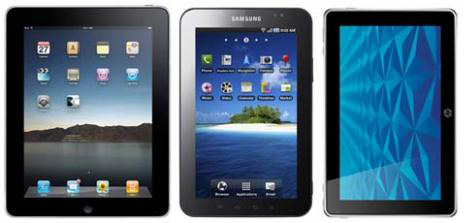
Clearing my email this morning after a week away on vacation — during which I managed for the first time in 11 years to stay off the Internet (well, except for my 2-year-old non-smartphone’s minimal connectivity) — I found a link to an Editor & Publisher article about how to increase the number of young people who subscribe to a newspaper. There are some good nuggets from the two contributors in that article, but I remain skeptical that many newspapers are geared for this effort, for the simple reason that when push comes to shove, they are still putting out print products aimed at an audience that doesn’t watch TV or read anything on the Internet. Last week’s massacre at a movie theater in Aurora, Colo., provided the latest, but surely not last, major example. I woke on vacation, checked my phone and found a Washington Post news alert sent overnight about the shootings. We turned on CNN and watched coverage for several hours, until it seemed that little new detail was likely to come out soon, and then turned it off and went about our vacation day. The next morning I went out and bought a newspaper — a major regional newspaper based in a metropolitan area. The shooting coverage was the centerpiece, the top headline, and took up the majority of the page — and there was NOT ONE SINGLE WORD on the front page that told me anything I had not heard on TV before noon the previous day. Turning inside, there was a sidebar of new information — new to me, at least, who had not been watching TV or reading the Internet since before noon. The experience angered me, both as a reader who expected better and as an editor.

My patience with newspapers was tried again when we returned home to find that our newspaper carrier had either not gotten word of our “vacation stop” or had ignored it and continued to deliver our paper. Why does anyone want to pay to have a daily alert to burglars piled up by the front door?

Older readers who are already newspaper junkies may brush these off and keep their subscriptions, but a combination of spotty service and old news is no way to win new readers.

John Robinson, former editor of the News & Record in Greensboro, N.C., has perfectly captured, in a very short blog post, the mythic spirit of the print newsroom. I get a little misty.

USA Today app
The 2012 RJI Mobile Media News Consumption Survey brings some interesting mileposts on the evolution of mobile news use, but to me it seems to raise some questions too.

In a post at poynter.org, Jeff Sonderman writes that certain results of the survey “makes tablet readers seem the best hope for print publishers that want to make a digital transition based on paid content.” Along with a finding that tablets are strongly favored for news consumption by people over 35, Jeff highlights three findings of the survey:

“More than half [52 percent] of the mobile news consumers who said they used their large media tablet most frequently for news also subscribed to a printed newspaper and/or newsmagazine. …
“Those who said they use their large media tablet most frequently for consuming news also are much more likely to subscribe to digital news products than those who said they use their smartphone most frequently for news. …
“About 60 percent of owners who favored large media tablets consider their experience consuming news on their tablets better than reading a printed newspaper.”

Among the questions I have is whether print news organizations should be focusing on where their current audience is or where the potential audience is – and that’s a question that goes back decades.

Among people who already subscribe to newspapers or news magazines, and who are over 35, tablets are a strong favorite – but if you focus on going after that group, what about the people under 35, who much more strongly favor using their smartphones rather than a tablet (57 percent vs. 28 percent)?

Smartphones also are nearly ubiquitous – owned by 92 percent of mobile news consumers, compared to the 40 percent who own tablets.

Maybe if your mobile site is good, it doesn’t matter, but I haven’t heard that the industry is approaching the point where most mobile sites are considered to deliver a good experience. Until then, the few news sites that are good would seem to have an advantage in building a reading habit among a larger segment of the potential audience, leaving the industry still relying on a shrinking portion of the population.

A focus on the tablet also could simply reinforce the old print newsroom habit of tailoring the work toward a particular time of day – except with tablets it is evening instead of morning. Smartphone users are roughly equally likely to check for news at various times of day, while half of tablet users wait until evening.

Ultimately, this may come down to whether you think news will (or should) wind up primarily supported by subscriptions and some type of paywall or will (or should) remain largely free and supported by advertising. If the former, the ready niche – of older, presumably better-off readers accustomed to your style of product – is tablets.

But even if that’s the better path in the short-term because it based on paid content now, not the promise of something uncertain later, it’s less of a digital transition unless your theory is that it is the best way to convince stubbornly print-oriented editors and publishers to begin tailoring their work toward a tablet-based digital audience, and that from there it then would be easier to get to an all-digital orientation from there than from where they are now.

7/11/12 UPDATE: I think my own view comes closer to what the deputy publisher of TPM expressed in May to Nieman Journalism Lab:

“We’re giving a lot of thought to three different kinds of consumption: Active consumption being at the desktop, on-the-go consumption being on your mobile phone, and passive consumption being in your bed, on your tablet, something like that.”

7/13/12 UPDATE: I’d like to see more studies of the effects of paywalls on demographics, but one from Our Hometown about what happened to the online audience of the Times Record in Brunswick, Maine (that link goes to a PDF), should give everyone pause: When the paper’s website was free, the average age of users was 43, but after a paywall went up the number of young site visitors dropped off a cliff and the average age rose to 59.