Feeds:
Posts
Comments


Most journalists seem to take it as a given that what is accurate and fair is true. But whether you agree apparently depends on what you mean by “true,” which became clear after several items in the news in the past month.

First came reports – such as this one from NPR – about “The Lifespan of a Fact,” a story drawn from the experience of John D’Agata, a writer, and Jim Fingal, who had been assigned to fact-check an essay by D’Agata. From NPR’s description:

“Ten years ago, D’Agata was in Las Vegas when a 16-year-old boy committed suicide by jumping off the Stratosphere Tower. D’Agata wrote an essay about the tragedy — but in the telling, he took a generous amount of artistic license.”

D’Agata fudged or fabricated details large and small, and distorted timelines and sequences of events. He defended his departures from accuracy by saying his version was “more dramatic” and that his essay was written in pursuit of a greater truth, an artistic truth.

Next came the horrifying (for journalists), full-show-length retraction by public radio’s “This American Life” for running a report by writer/performer Mike Daisey about Apple’s factories in China, which, similar to D’Agata’s essay, mixed and matched facts, locations, times and events without much regard to accuracy. Although clearly remorseful in the retraction episode, he remained stubbornly insistent that his error was only one of labeling, that ultimately he conveyed a larger truth that was important for people to feel connected to.

Neither of the above episodes would have caused a ripple of alarm if either had simply been labeled fiction. Much fiction is largely based is fact. You don’t have to watch very many movies or TV shows to understand that “based on a true story” has a wide variety of meanings, from “this is nearly entirely what really happened” to (more often) “there’s a nugget of reality here, but not a lot.”

Jeff Jarvis at BuzzMachine summed up what I feel about the two stories:

“You need not take a journalist’s oath to tell the truth. You need only be born to a mother such as mine, who told me and my sister often–very often–that ‘there’s nothing worse than a liar.’ It worked on us. My sister became a minister and I became a journalist.”

Then a third item entered the news, giving a twist to the idea of “truth vs. accuracy.” It turned out that the season-opening scene in AMC’s “Mad Men” last month, in which men in a New York advertising firm drop paper bags filled with water onto black civil rights protesters below, was drawn directly from the facts in a 1966 New York Times story – right down to one of the protesters, after coming up to the agency to find out who was dropping water bombs on them, saying, “And they call us savages.” That line of dialog, as it turned out, came in for harsh treatment from some TV critics. Said one, “When she said that, it just rings so false.”

How much truer can you get than reality? Must you fabricate to discover truth?

“Beauty is truth, truth beauty,” – that is all
Ye know on earth, and all ye need to know.

I supposed it’s appropriate that the meaning of those lines by John Keats “is disputed by everyone,” as englishhistory.net put it.

If only a journalist had been there to document what Keats intended.


This is what it has come to: I can’t see an Oscar-winning movie without finding parallels in journalism’s changing landscape. In this case, while watching “The Artist” I was struck by the remark by the lead character, a star of silent film as talkies begin to sweep the movie industry, quoted in a newspaper that he would not do talkies because he was an artist. He dismissed the emerging technology of film as crass and lowbrow, less worthy of notice. The sentiment was very familiar; I’ve heard or read it a thousand times from traditional journalists about the idea of (pick any): blogging the news, aggregation, raw video, frequent (or sometimes any) web updates, Facebook, Twitter, engaging with reader comments, and probably a few that I can’t recall right now.

The at the end of “The Artist” you get, in the only spoken lines of the whole movie, why he really dismissed talkies. In case you haven’t seen it, without giving the whole thing away I will just say it came down to an ability. But the way he coped with that and adapted to the new medium was a different skill that had not been utilized by the silent films. He could act, but in the new world acting was not enough. But he had something else to add, and the combination worked.

The Guardian has a new advertisement for its “open journalism” (essentially the intersection of traditional journalism, crowdsourcing and social media) that is the most fun ad ever for a news outlet. I wish I could embed the video here, but it isn’t working. (Warning when you go to the page: It’s an extremely slow-loading page.) The ad’s explainer text:

“This advert for the Guardian’s open journalism, screened for the first time on 29 February 2012, imagines how we might cover the story of the Three Little Pigs in print and online. Follow the story from the paper’s front page headline, through a social media discussion and finally to an unexpected conclusion.”

Elon University
A new survey by Elon University’s Imagining the Internet Center and the Pew Research Center’s Internet & American Life Project paints a picture of a future population that largely won’t be geared to consume news as it currently is produced. That’s not exactly the way it’s put, but draw your own conclusion:

“Young people accustomed to a diet of quick-fix information nuggets will be less likely to undertake deep, critical analysis of issues and challenging information. Shallow choices, an expectation of instant gratification, a lack of patience, are likely to be common results. One possible outcome is stagnation in innovation.”

On the bright side, it proposes the possibility of “evolving social structures (that) will create a new ‘division of labor’ that rewards those who make swift, correct decisions as they exploit new information streams and rewards the specialists who retain the skills of focused, deep thinking.” That sounds like what good journalists are geared to do, potentially putting them in the category of “new winners … in this reconfigured environment.” Let us hope.


The crude yet brilliant online comic The Oatmeal had a recent strip related to online piracy – inspired by the artist’s frustrated attempts to find a legal source for a show he wanted to buy – that actually had a moral highly relevant to traditional media companies trying to make their way in the new-media world: If you put all your focus on control instead of what your customers want, your customers will go elsewhere for what they want.

I thought it was great, and I wanted to post about it here, but it gets a bit far from the ground I usually stick to – but then the universe once again came through for me and showed me Jim Romenesko’s item about a Forbes piece that excerpts a much, much, much longer New York Times Magazine story and got a huge amount of traffic online. THIS IS EXACTLY WHAT I NEEDED! A journalist-level parallel!

From what Forbes writer Kashmir Hill sent Romenesko about her story on the Times story:

“Charles Duhigg’s piece is a masterful look at how Target gathers information about its customers and mines it to keep them loyal and better market to them. But as a writer who has covered the privacy beat for four years, what leaped out at me as the gold mine of the piece was the anecdote about Target data-mining its way into customers’ wombs so effectively that it picked up on a teen’s pregnancy before her father did. I ran with that anecdote and the sexy privacy issue Duhigg dug up — Target’s use of predictive analytics — distilling that from the larger piece for my privacy-interested audience. This is not a new or surprising practice in the world of online journalism – what has caught people’s attention is Forbes’ transparency. Thanks to our analytics being public, you can see the avalanche of social media love it triggered and the enviable million page views it garnered.”

So essentially, buried inside a nine-page story was a juicy nugget that had the potential to draw a huge audience. But that’s the thing – it was buried. And it had a dull headline, “How Companies Learn Your Secrets.” It’s information people would want, if only they knew it was there. Enter Hill:

“I suspect I drove a ton of traffic to the New York Times that they wouldn’t have otherwise gotten because they hadn’t sold their story quite as well as I did and didn’t create a short version of it that was easy to share and digest online. (Advice the NYT should consider is having their own bloggers tackle long pieces like this and chunk them up for the online crowd – a tactic the Wall Street Journal has effectively employed.)”

The difference between the comic strip and the Times/Forbes story is the artist knew what he wanted and the people who read the privacy story did not, but in both cases the originator of the content screwed up – in the comic strip, HBO made it impossible for the artist to find a legal source for “Game of Thrones” on DVD, limiting its audience to people willing to subscribe to the entire HBO universe; and the Times buried its best information in a story so long and dense that only its existing dedicated magazine customer base was likely to find it.

As journalists, we often don’t control a lot of business aspects of our industry, including whether our sites have paywalls or home delivery is available to everyone who wants it. But we are in charge of our own stories and photos — and making the best of it easy to find.


You’ll spend 18 minutes very well if you watch the talk by Kathryn Schulz, author of “Being Wrong: Adventures in the Margin of Error,” on the topic of what we learn by being wrong. In particular, it’s useful as a manager to remind yourself that different people see things differently, and your perspective might not be the best for understanding what’s going on. Or that events have changed beyond your plans, so you need to adjust. As a reporter or editor, you have to keep this in mind all the time so you don’t automatically ascribe motivations to people. As Schultz says, “It does feel like something to be wrong; it feels like being right.”

Her talk reminded me of the time I have most audibly been on the receiving end of someone assuming he was right and I was wrong. It was at the 2004 Republican National Convention, the night that Vice President Dick Cheney spoke, but the keynote speaker that night was a Democrat, Sen. Zell Miller of Georgia, whose speech rained fire and brimstone on the Democrats. I was there to serve as the editor for the Media General Washington Bureau staff covering the convention, and at some point as the fury of the speech became clear, the bureau chief, Marsha Mercer, looked and me, and I looked at her, and she said something like, “This is the lead, isn’t it?” There was no other way to see it, I thought. What Cheney eventually said that night was utterly expected. So Mercer wrote the story, I read it over, and I filed it. We packed up and headed out of the media area attached to Madison Square Garden, and my cellphone rang. A night editor at one of our papers was calling to ask, more or less, if we were out of our minds. “It’s the vice president’s night,” he said, and we simply should not have relegated the VP to the bottom half of the story. I wondered about it overnight and the next morning, when it was clear that almost everyone had done what that editor said we should have — led the story with Cheney’s speech. But for the next solid week, the only thing about the convention that got much discussion was Miller’s speech. I think you could make the case either way that night, but at that moment people making the different decisions felt just as sure that they made the right call and that the others were clearly wrong.

My point isn’t that Marsha and I were proved right, but that as an editor you have to remember that people have different perspectives, and even if your reporter has written a story completely opposite of how you think he or she should have, you have to understand why before you launch into a critique of what’s wrong with it.

The glamorous life of an editor


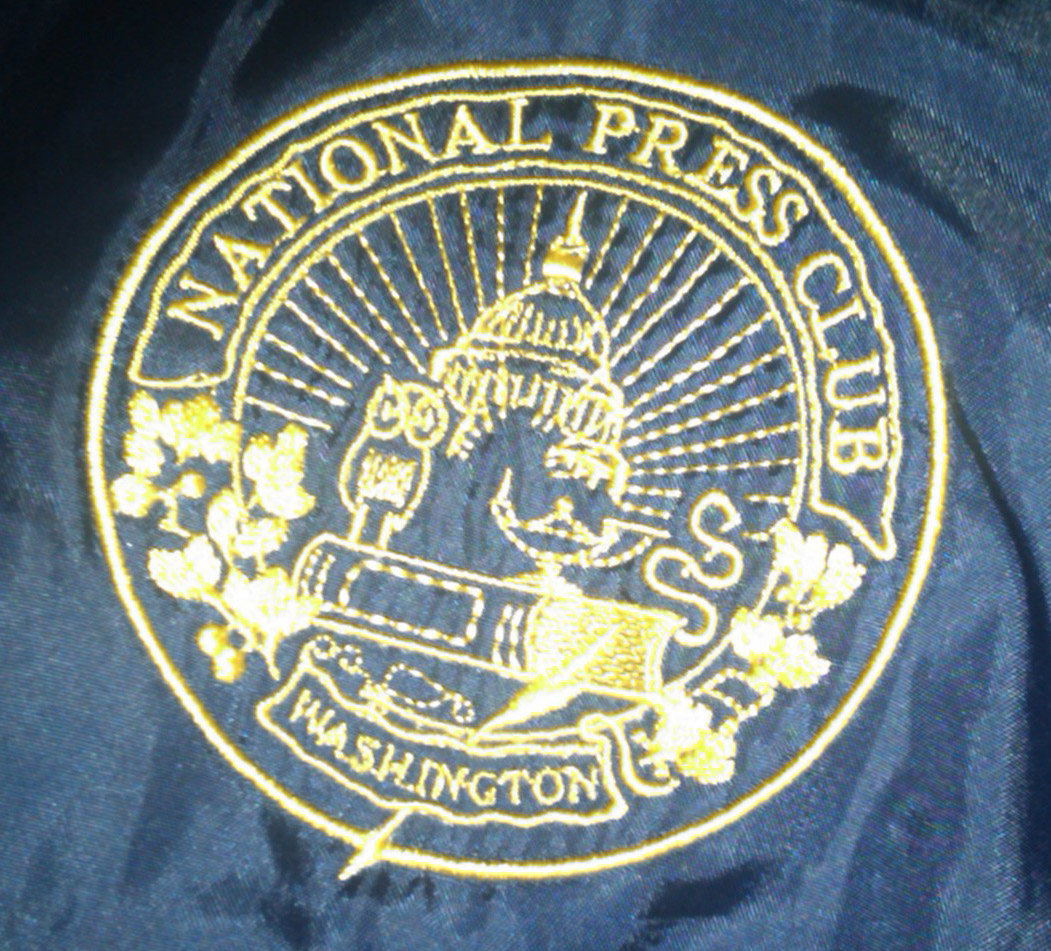
Around 10 years ago, when I found myself traveling several times a year to Washington, D.C., I joined the National Press Club, and I bought my dad a blue windbreaker with the club’s logo on it. After my dad died two years ago, the windbreaker came back to me, and in this mild winter I find myself wearing it a lot. Today at the convenience store near my office, the young man at the cash register looked at the gold logo and asked, “What’s the National Press Club?” I explained it is a group based in Washington for reporters and editors. “Oh, so you’re a reporter!” he said, almost beaming, and I could imagine him going home after work and saying, “You’ll never guess who came into the store today! A journalist! I see them on TV all the time, but I never thought I’d meet one.”

“No,” I said, “I’m an editor.”

His face fell. “Oh.”


I wasn’t going to post anything on Michael Kinsley’s post about a Felix Salmon article on the New York Observer, which (the Kinsley piece) focuses on the issue of whether the quality of writing on the Web matters. But I keep talking to people about it. At least five people in the past 24 hours. So it seems worth pausing and posing this question: Whether or not Kinsley is serious (I’m pretty sure he’s joking, but don’t ask me to put money on it), might the point of the following sentence be true?

“Never did it occur to me, until I read Felix’s blog post, that it might be possible, without seeming insane, to argue that all aspects of good writing — accuracy, logic, spelling, graceful turns of phrase, wisdom and insight, puns (only good ones), punctuation, proper grammar and syntax (and what’s the difference between those two again?) — are all overrated.” (And yes, it says “all aspects … are all overrated.” Move on.)

You can read Salmon’s piece here, which may help in the details if you don’t get exactly what is meant by this from Salmon:

“When you’re working online, more is more. If you have the cojones to throw up everything, more or less regardless of quality, you’ll be rewarded for it — even the bad posts get some traffic, and it’s impossible ex ante to know which posts are going to end up getting massive pageviews. The less you worry about quality control at the low end, the more opportunities you get to print stories which will be shared or searched for or just hit some kind of nerve.”

So the question raised here — again, whether or not Kinsley is serious — is how close is this to being correct? Undoubtedly, quality control in the media universe as described in the Salmon piece is lacking, but that quality is transitory anyway, as is the audience. If you as a publication are largely reliable, does it matter if you carry writers who really stink? In the online world, the Washington Post’s columnists and Cagle’s can appear side by side under the same set of links, and how many online reader really notice — or care — that the Post’s are better edited and cleaner? I don’t have answers to that yet.


Journalists need reminders now and then to pay closer attention to the lazy language they pick up from official sources – especially police, bureaucrats and businesspeople, to name three very large groups that like words that are not perhaps what you would call conversational English. Let this from Bob Ingrassia at The Fast Horse Blog be your reminder for this month that when it comes to the language in your stories, in the words of Eddie Murphy’s Axel Foley (in the clip above), “It should be more natural, brother, it should flow out.” If you wouldn’t say it in normal conversation with a friend, you might need to rethink what you’re writing or saying. Bob’s list of words or phrases to be banished and their conversational equivalents (and more are offered in the comments on his post):

fled on foot = ran away
high rate of speed = speeding
physical altercation = fight
verbal altercation = argument
reduce expenditures = cut costs
terminate employment = fire
reduction in service = layoff
blunt force trauma = injury
discharged the weapon = shot
transport the victim = take him/her
lower extremities = legs
officers observed = police saw
at this point in time = now
express concerns = complain
incendiary device = bomb
obtain information = ask or interview
deceased = dead
sexual relations = sex
roadway = road
fail to negotiate a curve = missed a curve
determine a course of action = consider options
vehicle = car or truck
citizen = person
individual = man or woman
commence = begin
emergency personnel = police, firefighters
utilize = use
complainant = victim
fatally injured = killed
motorist = driver
juvenile male/female = teen boy or girl
respond to the scene = arrive
precipitation = rain, snow
purchase = buy
intoxicated = drunk
controlled substances = drugs
appendages = arms, legs
contusion = bruise
head trauma = head injury
laceration = cut
provide leadership = lead
obstruct = block, get in the way
came to the conclusion that = decided, figured out
arrived at a decision = decided
reside = live

U.K.’s The Guardian, which is on the forefront in many experiments with public participation and transparency in the news, recently launched a variation on opening daily story budgets to the public. Jeff Sonderman writes for Poynter.org:

“This is a noteworthy experiment in both form and function. Readers can quickly gauge the leading stories of the day, how they’re unfolding and what the public might contribute. The result is a pleasant mix of facts, analysis, process and discussion — an illustration of news as a process, not a product.”

I can easily see how this would be burdensome for a small newsroom, but it’s not an all-or-nothing idea. The interaction and transparency is what’s important, regardless of how frequent the contact is.